About Me

My photo
Bhavnagar, Gujarat, India
Hello friends..!! I'm Gopi Dervaliya, a student of English Literature, pursuing M.A from Department of English, Maharaja Krishnakumarsinhji Bhavnagar University.I've completed graduation from Gandhi Mahila College,S.N.D.T Women's University, Bhavnagar and I've also completed B.ed from District Institute of Teachers Education and Training Center(DIET),Sidsar, Bhavnagar. My all blogs are about English literature and language.

Sunday, 6 November 2022

Literature of the Romantics

6 November,2022

     Hello dear friends, here I am writing a blog on the plot of 'Marriage' in 'Pride and Prejudice'. 

                Pride and Prejudice 


∆ Write a critical note on the plot of 'Marriage' in 'Pride and Prejudice'.

      Austen was a famous realistic woman writer of the late 18 century and early 19 century. Born in a clerical family and educated strictly. Jane Austen created six novels and three unfinished stories, during just 42 peaceful years, and was considered to be a prolific writer.

    Among the works, Pride and Prejudice is the most successful and impressive masterpiece. The famous novel was written in 1813, and was very popular all the time and had been read widely. It showed the daily lives and values of the Middle-Class Englishmen of that time, which was Male-Centered. Many people simply regard Pride and Prejudice as a love story, but in my opinion, this book is an illustration of the society at that time. Jane Austen perfectly reflected the relation between money and marriage at her time and gave the people in her works vivid character.

  The characters have their own personalities. Mr. Bennet is an old-style gentleman. Mrs. Bennet is a woman who makes great efforts to marry off her daughters. Mr. Bingley is a friendly young man, but his friend, Mr. Darcy is very proud. Mr. Darcy seems to always feel superior. Even the five daughters in the Bennet family are very different. Jane is simple, innocent and never speaks evil of others. Elizabeth is a clever girl who always has her own opinion. Mary likes reading classic books who actually is a pedant. Kitty doesn't have her own opinion but likes to follow her sister, Lydia. Lydia is a girl who follows exotic things, a handsome man, and is somehow a little profligate. The parents, the daughters, and even the young men are all representative personages of different groups. That's why when we read the book, we can easily find the same personalities in modern society now. Indeed, the book is representative of the society in Britain in the late 18th century and the early 19th century.

   Pride and Prejudice is a love story, but its author is also concerned with pointing out the inequality that governs the relationships between men and women and how it affects women's choices and options regarding marriage. Austen portrays a world in which choices for individuals are very limited, based almost exclusively on a family's social rank and connections. To be born a woman into such a world means having even less choice about whom to marry or how to determine the shape of one's life. The way that society controls and weakens women helps to explain in part Mrs. Bennet's hysteria about marrying off her daughters, and why such marriages must always involve practical, financial considerations. As members of the upper class, the Bennet sisters are not expected to work or make a career for themselves. Yet as women they are not allowed to inherit anything. As a result, marriage is basically their only option for attaining wealth and social standing. Yet Austen is also critical of women who marry solely for security, like Charlotte. 

   During the Regency Period in England's history, marriage was often entered into by men and women for many more reasons than just love between two people. Discover examples of the types of complex marriages and the significance of dowries during this period of English history in Jane Austin's classic novel, Pride and Prejudice, which was published in 1813.

   The beginning lines of the novel Pride and Prejudice, by British author Jane Austen, help the reader to understand the zeitgeist of marriage that took place in the time it was published in 1813. A rich man, either ill-favored or handsome, becomes the target of all the society mothers' attempts to get their daughters married off.

  In Pride and Prejudice, the scheming matrons include Mrs. Bennet and Lady Catherine De Bourgh. And it's not just the mothers who are pushy when it comes to securing a husband. Throughout the novel, Caroline Bingley throws herself into the path of Mr. Darcy right and left. Her goal is to show her superiority of accomplishments and character and to demean Elizabeth Bennet,the woman Mr. Darcy is really interested in.

  But in the novel, women weren't just seeking out marriage as some sort of prize; there was real societal risk involved in not securing a husband. Pride and Prejudice explores the real risks women face in regards to their reputation and what could happen if they wound up in a poor match or alone. It also showed that it was possible, despite these risks, to marry for love.

   During this time period, a woman's reputation was worth its weight in gold. This is especially true of the young and unmarried. It is stated in the text that once a woman's reputation is lost, it's lost forever. Lydia Bennet and her sister Kitty act in a wild, unmanageable manner with the officers of the militia. When Lydia runs off with Mr. Wickham, she would be seen as a fallen woman if he was not induced by Mr. Darcy to marry her.

    There are also several examples of couples who marry for love in Pride and Prejudice. The main characters of the novel, Ms. Elizabeth Bennet and Mr. Fitzwilliam Darcy, find themselves in a comedy of errors. He is too proud of his family and place in society. She is prejudiced because of a series of overheard insults and slights he makes about her.

    Jane Austen, one of women writers, was famous for her realistic writing style. Among her works, Pride and Prejudice is a world-famous masterpiece, in which she created different marriages, and showed us her views on marriage. The views have some guiding significance to our modern women even now.

    Jane Austen weaved different marriages in Pride and Prejudice. The  marriages are all different from each other. Through these different marriages, Jane Austen showed us the true social problems and characteristics of that time, and implied her own values of marriage.

∆ Elizabeth Bennet and Fitzwilliam Darcy :


          As the heroine of this novel, Elizabeth's love is very important. At the beginning, Elizabeth refused to accept Darcy's pursuit. Because in Elizabeth's mind, Darcy is very cold and extremely proud, he is rich and has high social status, and he looks down upon the middle-class girls. In particular, he insulted Elizabeth Bennet, a girl of spirit and intelligence and his father's favorite. But as time went by, Darcy began to admire Elizabeth in spite of himself.

    For Elizabeth, love is the most important element of marriage. She does not accept a marriage which is not based on love. She doesn't love Collins, so she refused the future heir to the manor and the wealth. And at first she thought Darcy was too arrogant, so she also refused the wealthy gentleman. We can see a rational and intelligent girl in the novel, who is just Elizabeth. As they got to know each other further and further, Elizabeth cleared the misunderstanding between them, and Mr. Darcy saw the disadvantages in himself, they fell in love with each other on the basis of love. This is the best ending for them.

∆ Lydia Bennet and George Wickham :

            We know that, in the novel, Lydia, as Mr. Bennet's third daughter was spoiled by her mother, so she was very conceited and arrogant, and behaved frivolously. Wickham, he has no other advantage except for his attractive physical appearance. In his opinion, love is just recreation. Due to his trouble with a large debt, he entices Lydia and gets her love easily. When their love does not get the permission from the parents, they elope. When Elizabeth hears the news, she believes that their love does not have a happy ending. Indeed, Wickham would not marry Lydia, because she was not charming and had nothing to attract him. He doesn't love her but the wealth of her family.

∆ Jane Bennet and Charles Bingley :


      Jane was the oldest of Mr. Bennet's daughters, a pretty girl of sweet and gentle disposition. Bingley was an imme diate success in local society. At the first ball, Jane has a good impression of Bingley, and it is the same to Bing ley. They were attracted to each other at once. 

   For Bingley, he had a good temper. He was so modest and had no opinion about his own marriage. No matter how obvious his attachment to Jane was, he believed Darcy's representation of Jane's indifference was true. Because Mr. Bingley's two sisters didn't like Jane, they thought Mr. Bingley should choose Darcy's sister as his. wife, who was of course "superior" to Jane. Under the influence of his sisters, Mr. Darcy Bingley began to doubt Jane's affection for him. Finally, he thought Jane didn't love him, so he left her without saying goodbye.

    Later, when all the misunderstanding was clarified, he came back to Jane at Darcy's assistance. Bingley's indecisive character determines his happiness and results that this life was controlled by others. Later on a visit to Bingley's, Jane's love affair with Bingley is advanced. Even Bingley is apparently on the point of proposing to Jane. Bingley is attracted by Jane's tenderness and beautiful appearance, while Jane is attracted by his gentle manner. They love each other.

∆ Mr. Collins and Charlotte Lucas :


      In the novel, when the homely and plain Charlotte decided to marry Collins, she was only satisfied, without thinking highly either of men or of matrimony, marriage had always been her object, and we can see it was the only honorable provision for well-educated young women of small fortune. In fact what Charlotte asks is only a comfortable shatter, a higher social position and a better wealth.

   For Collins, he is a man who does not know what love is at all. When Mr. Collins first proposed to Elizabeth, much to her mother's displeasure and her father's joy, she firmly and promptly rejected him. He almost immediately transferred his affections to Elizabeth's best friend, Charlotte Lucas, who, 27 and somewhat homely, accepted at once his offer of marriage. Collin's decision to marry Charlotte is only because of Elizabeth's refusal to him.

Thank you...

Words: 1679I

Images: 5


Literature of the Neo-classical Period

6 November, 2022

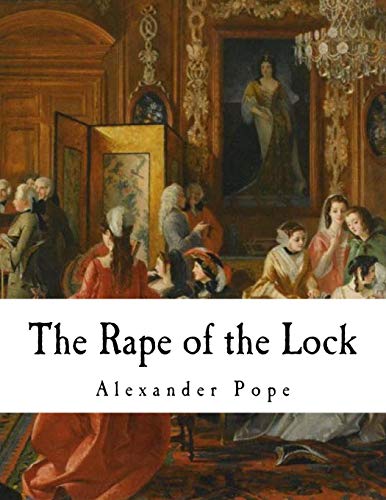
          Hello dear friends, here I am writing a blog on 'The Rape of the Lock' : A Social Satire.

              The Rape of the Lock 


∆ 'The Rape of the lock', A social satire : 

   Alexander Pope was one of the commanding literary figures of the enlightenment period. He was a poet, and well known for his satirical and discursive poetry. He was the one who translated homer works and was famous for The Rape of the Lock and An Essay on Criticism.

   'The Rape of the Lock' is a mock heroic epic first published in 1712 written on the request of his friend John Caryll who explained that his friend Peter had cut off a lock of the hair of Arabella Fermor.

   In Pope's own words, “The stealing of Miss Belle Fermor's hair was taken too seriously, and caused an estrangement between the two families.

 The enlightenment period was full of knowledge, reason, and exaltation of wit emerged top in the scenario of both Horatian and Juvenalian satires, which vividly depicts that contemporary period, which was full of moral corruption, vanities, follies, and trivialities on the other side. John Dryden, a playwright of the 17th century added. "The true end of satire is the amendment of vice by correction," and that is what Pope set out to do in his "Rape of the Lock." Under the umbrella, Pope depicts his society especially targets the upper class in The Rape of the Lock. Satires through different rhetorical figures used aimed at pointing out the drawbacks and chastising the hypocritic society.To eradicate the flaws of society, Pope and Swift work hard by using different ways.

     Satires used by the Pope can be truly called social satires in one way or another because it satirizes the society as a whole. Belinda represents the vanity of women and vanity while on the other hand Baron aristocratic gentlemen of the period. In The Rape of the Lock, Pope employs Horation style delicately chiding society in a sly but polished voice by holding up a mirror to the follies and vanities of the upper class. The Pope successfully attempts to highlight the degraded society of Britain delicately and lyrically.

  In general, Belinda is a character in the poem "The Rape of the Lock" who represents the upper-class ladies of the day. In this role, she reflects the follies and frivolities of the era's female characters, and she does it well. Using the fictitious identity she has established for herself, Pope has satirized the frivolities of women. Some of the most caustic statements are those that appear when Belinda is portrayed to be awakening from her bed. In the morning, she sleeps till the small hours of the morning. Her lap dog licks her on the cheek, jolting her out of her slumber. The poet makes fun of the fact that women spend much too much time worrying about their beauty and self-decoration in his poem.

   The poem is actually about feminine frivolity because the Pope showed many errors of women, especially aristocratic females in the first.

    As we see he portrays the lifestyle of Belinda that she wakes up very late nearly noon.

"Now Lap-dogs give themselves the

rousing shake, And sleepless Lovers, just at Twelve, awake:"

     He makes fun of aristocratic females of the period that were fond of gilded chariots and ombres. These are the vanities of the females that will remain with them after death.

He writes;

"Think not, when Woman's transient Breath is fled,

That all her Vanities at once are dead." 

    Pope shows that females are interested in love letters, whatever they received.Here, again he makes fun by exposing the shortcomings of ladies for recreation and marked balls.

"With varying Vanities, from ev'ry Part,

They shift the moving Toyshop of their Heart"

   He says that women are materialistic and inconsistent in their love but expecting a lot from her friend. This sentence's verification is confirmed by this line. "Thy eyes first opened on a Billet doux" Interestingly, Pope satirizes women from any angle.He further comments in a very delicate way that upper class females pay more attention to superficial beauty instead of outer beauty. Many beauty and facial powders and other things are on Belinda's toilet table.
"Here Files of Pins extend their shining Rows,

Puffs, Powders, Patches, Bibles, Billet doux."

    Pope satirizes Belinda from the religious perspective as well.

    The poet has satirized the system of judges that they, at 4 o'clock, hurried to sign the sentence so that they could have their dinner in time.

"Meanwhile, declining from the noon of day,

The sun obliquely shoots his burning ray,

The hungry judges soon the sentence

sign,

And wretches hand that jurymen may dine;"

   The Rape of the Lock is a humorous satire on the upper class of England, with its cultural and traditional scandals, corruption, follies, especially focusing on fashionable men and women. The Pope depicts his contemporary society and follies with light ridicule. He wants to correct the wrong prevailing customs of society and introduces us to a world of frivolity. Both Swift and Pope want to eradicate the social evils to reform it in a new way. Their purpose was didactic.

   Pope uses satire to expose the follies and defects of his contemporary society. The most vivid satire is the comparison of Belinda's stolen hair to the abduction of Helen of Troy. The people at that time mostly engrossed themselves in frivolities and trivialities. Pope wants the people of England must be worried about important and significant things not about meager things.The Rape of the Lock's importance grows because of its origin as well. This is the first mock-epic ever written before; it is a combination of classical models and satires.

    The whole panorama of The Rape of the Lock is restricted to the 18th century aristocratic life. The strange battle fought between the fashionable belles and the beau, the fall of Dapper Wit and Sir Fopling are demonstrative of the hollowness of the people of this age:

"A beau and witling perished in the

throng

One died in metaphor, and one in

song."

    Even the greatest of the great, the Queen herself is satirized to produce a truly comical and witty effect.

"Here thou, a great Anna whom three realms obey

Dost sometimes counsel take - and sometimes tea."

    The Rape of the Lock is a true representation of the eighteenth century. It shows the genius of the Pope for satirical skills in poetry. It beautifully highlights the social evils, follies, and absurdities at a time with the utmost brevity, which makes Pope the greatest and commanding literary figure of the enlightenment period.It is obvious that the main purpose is to regenerate the society, but Pope Targets upper the aristocratic class especially females. The moral bankruptcy of the ladies is further exposed when Thalestris points out the need for sacrificing everything, even purity, for the sake of popularity.

"Virtue might be lost, but not a good name:

honor forbid! at whose unrivaled shrine ease

pleasure, virtue all our sex resigns." 

   The Pope exposes the hollowness and emptiness of the ladies which of course, amuse us. Even their chatting cantered around sex, dancing, and singing. "At every word a reputation dies."

    The Rape of the Lock assimilates the masterful qualities of a heroic epic, yet is applied satirically to a seemingly petty egotistical elitist quarrel. At the time of Pope Epics were very highly regarded especially John Milton's Paradise Lost because of its subject matter and allegorical references.

    Pope also employs and copying the methods to generate a huge impression and ultimately succeed but in a humorous way. Despite the likeness to historical epic pieces, this work displays a light and playful tone, which illuminates the idiosyncratic nature of the poem's central conflict, the Baron stealing, or raping Belinda's illustrious lock of hair.

    The overall work of the Pope shows heavy dissatisfaction over his society. Both Pope and Swift try to illuminate and highlight their contemporary society but in a different way. Of course, the Pope's struggle is effective to eradicate society and gives them a new positive direction, which helps them a lot politically, socially, religiously, and financially.

    The poem is a bright example of mock-epic which reflects the degraded society of England with humorous and delicate satire.

    It depicts the idle life of the pleasure seeking young men and women and introduces us to the world of fashion and follies. The pleasures these classes of people are engaged in are - flirting, card-laying, driving in Hyde Park, visiting theatres and writing love letters.

    Pope's satire is didactic and aimed at reforming society. It is full of wit and intellect which inspires the reader at the very beginning. Lowell is right in saying that "Pope stands by himself in English verse as an intellectual observer and describer of personal weaknesses."

    According to the Pope, we should not pay attention to trivial things, rather focus on the main and serious issues of life. He stresses that being able to laugh at once is a key ingredient in having a successful life.

    In short, the long discussion can be summed up in these words. 'The Rape of the Lock' is a mock heroic epic written by Alexander Pope in 1712. The Pope exposes the follies and absurdities of that contemporary age in a humorous way, which leads the people of England to follow the right direction in every field of life in the future. It is a criticism of the vanities of females and the upper class of the eighteenth century who have no proper guidelines and mission in life to go ahead. This criticism is helpful for the people of England to choose the right path. It can be called that he was the true representative of the Enlightenment period.

Thank you...

Words: 1616

Saturday, 5 November 2022

Jude the Obscure

   5 November, 2022 

     Hello dear friends, here I am writing a blog on Themes of 'Jude the Obscure'.

                      Jude the Obscure


Themes of the novel 'Jude the Obscure' :

  • Religion

  • Marriage

  • Education

  • Social Class

  • Disappointment

Religion :


     Religion plays a major role in Jude's life when he is young. While his first dreams are of going to Christminster to be a classical scholar, he eventually thinks of going there to pursue religious goals.In the end, Jude swears off religion.However, Sue, who has always disparaged religion, turns to the Church after her children are killed.

Marriage :

   In a way, this book is staging a whole debate on the institution of marriage. Hardy does not necessarily suggest that marriage is automatically bad, he just makes it clear that he believes people should be able to step away from a marriage if things do get dire. He also makes it clear that marriage is not necessarily linked to love in any way, so it's obvious that a decent, understanding society would accept Jude and Sue's relationship because they truly love each other, regardless of whether they are married or not. Jude and Sue are clearly a good match for each other, so Jude wants to get married. Sue, however, feels that marriage will poison the relationship. The narrator does not seem to favor either side; it is left up to readers to decide how the problems with marriage might be solved.

Education :


   Hardy highlights many kinds of education in Jude the Obscure. Jude teaches himself the classics, Latin, Greek, and much more in the hopes that he will one day be able to further his education in the proper setting: at college. But, the book strongly criticizes the university structure that keeps Jude from pursuing a higher education because he comes from a working-class background. Even though Jude has taught himself brilliantly, what he knows isn't as important to the colleges as where he comes from. It's a great tragedy that, despite all of Jude's dreams and hopes, he never had a chance in the first place to make it in Christminster—in this snobby world, his rural, poor background is enough to keep him down. In the novel, the level of traditional education one reaches is closely tied to the class system. 

Social class :


    In addition to his points about education, Hardy also criticizes the rigidity of social class more generally. Jude is limited in his career options because as a working-class man, he cannot hope to be promoted beyond a certain level, even in fields like the clergy that are supposed to be open to all. 

Disappointment :


    Disappointment crops up over and over again in this novel: Jude is disappointed by his career; he is disappointed in his marriage to Arabella and then his cohabitation with Sue; he is disappointed by Mr. Phillotson, who never achieved his dream of getting a university degree. Even Time's assertions that he never asked to be born suggest a certain disappointment with life. Since most of the novel's tragedies come as lost opportunities, the ways that the characters deal with disappointment contribute to their characterization. For example, Phillotson takes a relatively mature perspective when he is disappointed in his marriage to Sue, and allows her to be with Jude. Arabella, in contrast, deals with her disappointment in Cartlett by spying on Jude and scheming to get back together with him.

Thank you...


Literature of the Elizabethan & Restoration Periods

6 November, 2022

       Hello dear friends, here I am writing a blog on Character sketch of Lady Macbeth.

                      Macbeth


∆ Character sketch of Lady Macbeth :


Introduction:-

     The play "Macbeth" can be divided into two parts. The first part constitutes the rise of Macbeth and the second half constitutes the fall of Macbeth. In the very first part are found the roots of Macbeth's fall. Lady Macbeth is the guiding force and deciding factor during the first half of the play. without her the tragedy would not have been possible.

Her ambition:- 

     Both Macbeth and Lady Macbeth are highly ambitious. The germ of ambition in Macbeth comes through the witches.The same Germ creeps into the mind of Lady Macbeth through the letter of the Macbeth. She is excited at the prophecies of the witches and becomes inpatient to commit the murder of Duncan. She wants the immediate presence of her husband.

Good planner:- 

     Lady Macbeth is wise and tactful.her husband to beguile the time.Shw plans the murder of Duncan. She performs all that her husband cannot do. Macbeth murders Duncan but he leaves the work half-done.

A Contrast to Her Husband :- 

    Lady Macbeth is a contrast to her husband. When Macbeth hesitates to kill the king Duncan and says - "I shall proceed no more in this business", Lady Macbeth scolds him- was the hope drunk,wherin you dressed yourself' ? and bring him to the right point of murder. The sense of morality is always alive in Macbeth but it is totally wanting in Lady Macbeth. She wants to be a criminal. She wants to unsex herself. She wants to fill herself and her husband with the cruelty from top to the toe.

A Tragic Woman:-

     Lady Macbeth commits unnatural deeds. She suffers abnormally from Somnambulism. She can not let the blood of Duncan disappear from her hands. She says- "All that perfumes of Arabia cannot sweeten this little hand". Lady Macbeth refers to all the crimes that have been committed by her husband in which she had the guiding force and was the sole motivator.

     Macbeth is one of Shakespeare's most famous and ruthless female characters. She is the leading character of the tragedy play, 'Macbeth'. She is the wife of the protagonist of the play. When the audience first sees her, she is already plotting Duncan's murder, and this makes her the most frightening and villainous character. She is strong-headed and ambitious and knows how to take charge. As soon as she reads Macbeth's letter informing her about the prophecies given by the three witches, she knows that she will have to push Macbeth into doing what she believes needs to be done. She thinks Macbeth is weak-minded and will not have the heart and courage to kill Duncan.

     She provokes her husband to kill the king Duncan. After she becomes the Queen of Scotland. Later she also develops madness due to guilt of crime. Eventually she kills herself offstage. She is the female protagonist of the play. The plot depends on her actions. She is the one provokes and forces as well to kill the king Duncan. Being a wife she always stands for her husband. She is also aware that she has taken a wrong step which is very disturbing. She realises it but it was too late. She cannot undo her mistake and it makes her feel guilty. This is also the reason that she kills herself in disappointment. Through, she is the only reason for the fall of Macbeth, yet, she is regarded as the protagonist of the play. This is so because she never leaves her husband even in bed times. In fact she considers herself the reason and so she decides to kill herself.

     Lady Macbeth is one of the major characters of the play. She makes the plot interesting. Although she is still very ambitious, she is a responsible wife. She tries her best to protect her husband. When she comes to know that it is impossible to deal with the situation, she leaves his company forever. She seems to be a favourite of both the playwright and the readers as well ; without her, the play would not have been complete.

      Her personality is portrayed as forceful and dominant. Unlike Macbeth who constantly struggles with his conscience and loyalty before finally murdering Duncan, Lady Macbeth has no problem or hesitation with the plan of murder. She gives priority to her ambition and no amount of loyalty or conscience succeeds in making her give it a second thought. Although Macbeth has hoped to find some other alternative to become king without committing murder, Lady Macbeth unflinchingly accepts murder as the only necessary way to fulfil her ambition of becoming the queen.

     She is also seen as wishing to strip herself of all feminine qualities so that she can carry out the task of murdering Duncan. This shows Shakespeare's perception regarding the dynamics between gender and power. It is evident that Lady Macbeth merely reflects the general perception of that time that ambition and violence are inextricably linked to masculinity.

     Through Lady Macbeth's character, Shakespeare also seems to be showing that femininity is more closely linked with the capability of manipulation. This is also reflected in the way that three witches are shown to be manipulating the mind of Macbeth. The play shows women as using the feminine method of manipulation to realise their own ambitions. Shakespeare implies that women too can have ambitions and they too can be as cruel as men but the means through which they achieve their ambitions are shrouded in traits of manipulation which as depicted in the play are traits.

    What makes Lady Macbeth more of a human character rather than a witch is the disintegration of her former ruthless self after the murder of Duncan. Just as ambition affects her more strongly than Macbeth before the crime, so does guilt plague her more strongly afterward. By the close of the play, she has been reduced to sleepwalking through the castle, desperately trying to wash away an invisible bloodstain. Once the sense of guilt comes home to roost, Lady Macbeth’s sensitivity becomes a weakness, and she is unable to cope. Significantly, she (apparently) kills herself, signaling her total inability to deal with the legacy of their crimes.

     Lady Macbeth is a perfect judge of her husband’s character. She is well-aware of Macbeth’s strength and weakness:

"Hie thee hither T

ThatI pour my spirit, in thine ear

 And chastise with the valour of my tongue.” (Act-I, Scene-V, Macbeth)

    She rubs her hand in an abnormal way, but the spot stays in her hit-oppressed brain. This serves the dramatic irony and stands out as contrast:

“A little water clears us of his deed.”

    Once she urged her husband to walk along the bloody way. Today in an insane way she exaggerates:

“All the perfumes of Arabia will not sweeten this little hand…”

     Lady Macbeth entirely breaks the stereotype of women being kind and benevolent in the first act. After Macbeth writes home telling of his murderous plans, Lady Macbeth begins talking to evil spirits. Because women often lack the ruthlessness to kill someone, Lady Macbeth asks the spirits to make her male.

     This is the first humane feeling that we see from Lady Macbeth in the play. Her desires and inspiration are very strong, but when the opportunity presents itself, she cannot carry through with the act. Therefore, she uses her husband’s vulnerability to persuasion to achieve her dreams.

     The relationship between Lady Macbeth and Macbeth is based on political triumphs, not love. Lady Macbeth often accuses her husband of talking but not carrying through his ambitions. Although she often talks about becoming queen of Scotland and murdering Duncan, she never does anything to help this cause. The qualities that it takes to murder a king are not present in Lady Macbeth.

     Lady Macbeth has become totally engrossed in becoming queen of Scotland. She is relentless in her pursuit of this goal, and she will kill anyone who is in the way of the throne. She is able to influence Macbeth into murder by telling him they are presented with an extraordinary opportunity.

     Lady Macbeth at least can acknowledge that the murder is wrong and immoral by calling down darkness to hide her murder. She is not completely a ruthless psychotic, and she knows the difference between right and wrong.

    This, however, further emphasizes the desire and ambition that Lady Macbeth possesses to be queen. She realizes the numerous negative effects of murdering Duncan, but she neglects them because, more than anything else, she wants to be a queen.

    In order to accomplish her dreams, Lady Macbeth manipulates and convinces Macbeth to do things that he is against. But because of her intense ambition to be queen, nothing can prevent her from achieving this goal.Lady Macbeth had been described as the fourth Witch more diabolical because she possesses the gracious human form and effective tongue. Lady Macbeth does certainly instigate her husband to the act of murder.

    Lady Macbeth is not a devilish woman. It is her love for her husband which leads her to the crime. So great is her devotion to her husband that she is even prepared to renounce her womanly nature and assumes a role of a cruel task-master. She over strengths herself in the interest of her husband and the result is total breakdown.

    Lady Macbeth is certainly more resourceful than her husband. It is she who takes the initiative in planning the murder of Duncan and even partly assists Macbeth in carrying out the plan.

Conclusion:- 

    Thus, like her husband Lady Macbeth is also an important character, well suited for the tragic drama. Lady Macbeth plays the role of true wife. She holds herself responsible for Macbeth's fall.

Thank you...

Words : 1620


Tuesday, 1 November 2022

Importance of being Ernest

2 November, 2022      

     Hello dear friends, here I am writing a blog on character sketch of Cecily Cardew of 'Importance of Being Ernest' by Oscar Wilde. 

                           Importance of being Ernest

   
     “The truth is rarely pure and never simple” (Wilde 1738). There are people in this world who fabricate on their lifestyle just to please others or themselves. However, the truth will always reveal itself sooner than later. In the play, Oscar Wide reveals that it is difficult to tell the truth even if try to, because the truth will never be so simple. Once all of the lies have been told, who would believe the truth.

     Oscar Wilde wrote the comedy melodrama play “The Importance of Being Ernest” which is his perception of the rigid Victorian social norms and values. Also the word “Earnest'' plays a significant role in the play. Oscar Wilde uses his characters to express’s his deviance of the Victorian social norms, such as marriage, hereditary privileges, sexual roles and language. The main characters are Jack Worthy (Ernest), Algernon Moncrieff, Lady Augusta Bracknell, Gwendolen Fairfax, Cecily Cardew, Rev. Chasuble and Miss Prism. These characters represent the social class system during the Victorian age.

∆ Character Map :


∆ Character sketch of Cecily Cardew :

    Cecily is the granddaughter of Thomas Cardew, who adopted Jack. She is quite sheltered, having spent her life in the country rather than in the city. She is described as less sophisticated than Gwendolen. She has a normal life with desires to get married and have children with a man of her dreams. Like Gwendolen, her primary desire is to marry a man whose name is Ernest.

   Her helping nature is also seen from the fact that she wanted to meet Uncle Jack’s brother, Ernest and cure him of his wickedness. She believed that it would help the brothers to understand each other in a better way, which would bring them emotionally closer. Therefore, when Algernon introduces himself as Ernest Worthing, she happily welcomes him. Even she notes down his words of admiration in her diary. She also tells him that she was so much fascinated by his name Ernest that she has imagined they are already engaged to each other, even before they met. Like Gwendolen, Cecily too would marry the man whose name is Earnest.

    Cecily is a friendly person, who was always ready to welcome her guests. It is seen when Gwendolen comes there in order to meet Jack. Cecily very cordially welcomes Gwendolen and makes her feel comfortable in her new surroundings. But when she suspects that Gwendolen has come there to meet Ernest, her own fiancee, she expresses her womanly attitude towards her. However, after her doubt gets cleared, she readily unites with Gwendolen as if they are sisters. Thus, Cecily’s is a lovable character in ‘The Importance of Being Ernest’.


Thank you...

Friday, 7 October 2022

Aristotle's Poetics

7 October, 2022

     Hello friends, Here I am writing a blog on Aristotle's Poetics. Which is assigned by Dilip Barad sir.

                Aristotle's Poetics


∆ What is your understanding about Aristotle's poetics ?

→   Plato was the most famous literary critic before Aristotle. Aristotle was the great decipal of plato and according to Aristotle poetry was not only pleasant but also useful for man and Society.

      According to Plato, poetry imitates only superficial appearance like a painter. But Aristotle behind that poetry not only imitates the external but also internal emotions.

  Plato condemned poetry on moral, intellectual and emotional grounds but Aristotle justifies poetry on moral, intellectual and emotional grounds.

      Plato says that art being the imitation of the actual is removed from truth but Plato fails to understand that art also give some thing more which is absent in the actual.

     Thus according to Aristotle poetry as a medium of imitation that seeks to represent or duplicate life through character, emotion or action.    

      He also defines 'imitation is one instinct of our nature.' He considers comedy is an imitation of characters of a lower type, tragedy is an imitation of an action that is serious, complete and of a certain magnitude.

∆ Which reference to the literary text you have studied during B.A programme, writer brief note on the texts which followed Aristotlian literally tradition.

→   "Old Man And The Sea" I have studied during B.A. Which followed Aristotlian literally tradition.

Hamartia : Santiago also suffers from a hamartia which is his pride that presses him to "go far out" into the sea. 

Catharsis : Santiago's poverty, solitude and downfall excite feelings of pity in us. We fear because we recognize similar possibilities in us. However, Santiago's belief, "A man can be destroyed but not defeated" gives us relief.

∆ With reference to the literary text you have studied during B.A programme, write brief not on the text which did not follow Aristotlian literary tradition.

→  I studied in B.A programme, Pride and Prejudice is not follow Aristotelian literary tradition, because Pride and Prejudice is not a tragic novel, as it ends with the protagonist's wedding to a man she loves.

∆ Have you studied any tragedies during B.A. programme? Who was/were the tragic protagonist/s in those tragedies? What was their ‘hamartia’?

→ Yes, I studied in B.A programme, the play Othello is very tragic, Othello is a most famous example of hamartia. He killed his wife and without knowing everything that is his error for his downfall.


Thank you...

Thursday, 6 October 2022

Hard Times by Charles Dickens

6 October 2022

       Hello friends, here I am writing a blog on review of the Hindi play based on "Hard Times" by Charles Dickens.             
  
                           Hard Times

  Hard Times:For these time, written by Charles Dickens, was originally published in serial form in 1854. Serialised weekly in Dicken's own publication, Household Words.It is one of Charles Dicken's shortest novels. In this novel Dickens discuss about Industrialism.

Time : The middle of the nineteenth century

Place : Coketown, a manufacturing town in the south of England

Novel written in 3 parts

Sowing
• Reaping
• Garnering

    Dickens divided characters of this novel in four groups :

Group 1: Industrialist : 

→ Thomas Gradgrind
→ Mrs. Gradgrind 
→ Louisa Gradgrind ( Loo)
→ Thomas Gradgrind (Tom)
→ Jane Gradgrind
→ Josiah Bounderby 
→ Mrs. Pegler
→ Mrs. Sparsit

Group 2: Circus :

→ Cecelia Jupe 
→ James Harthhouse
→ Mr. Sleary

Working class : 

→ Stephen Blackpool
→ Rachael clady

School :

→ Mr. Mcchoakumchild 
→ Bitzer 

   The play begins with a conversation between Sutradhar and Nut.They started the play with a song that gives the theme of the play : "कमाल की कहानी ये हैं तो बड़ी पुरानी जी" Charles Dickens take side to working class people not industrial people. 

    "Now, what I want is Facts. Teach these boys and girls nothing but Facts. Facts alone are wanted in life."(Hard Times,Book 1, Chapter 1)

     In the industrial city of Coketown, Josiah Bounderby is a rich and factory owner and banker. He is friends with Thomas Gradgrind, a rich politician and an education reformer in whose school students only learn about facts. Gradgrind's own children, Tom and Louisa, also grow up in this system. Gradgrind is basically trying to make kids into robots.When a traveling circus show comes to Coketown, one of the clowns abandons his daughter, Cecelia Jupe, there. Gradgrind takes her at his house.

  Louisa and Tom grow up. Gradgrind basically gives both of them to Bounderby. Tom works for him as a bank clerk, and Louisa ends up marrying the guy.But, obviously Gradgrind thinks everything is fine.

    In Bounderby's factory, a worker named Stephen Blackpool, he leads a pretty sad life.He got married too young to a woman who is now a half-crazy alcoholic. He pays her to stay away from him.

   In the factory, all the workers are being organized into a union.Bounderby fires Stephen from the factory.Before he leaves, Louisa gives him some traveling money.Tom in secret asks him to loiter in front of Bounderby's bank for a few nights. After Stephen leaves, Bounderby discovers that the bank has been robbed! Of only 150 pounds.Suspicion naturally falls on Stephen.

    Harthouse reveals to Louisa his passion for her and asks her to run away with him. She takes the train to her father's house in Coketown. She tells him she might be in love with Harthouse, confesses that she almost had an affair, and then faints. Gradgrind is shocked, and he finally realizes how much he messed up his kids.

    Gradgrind asks Bounderby to let Louisa be a semi-permanent "visitor" at her father's house. But Bounderby is all like, "Actually, no, because you pretty much sold her to me, remember? If she doesn't come back by tomorrow, this marriage is over." Would still have to be married to him legally. She would be totally stuck. Sissy seeks out Harthouse, telling him to leave and never come back.

   Sissy Jupe and Rachael are worried about Stephen and try to find him. Tom flees, and Louisa and Gradgrind realize that he is the bank robber. Tom hides as a clown in the same circus where Sissy's father used to work. When Gradgrind confronts him, Tom tells his father that political economy made him into a thief.

   To conclude, Dickens’ novel discusses the social impact of the Industrial Revolution and the dehumanization of workers by machines. Much like the repetitive actions involved in working in factories dull the lives of the workers. Finally, Sissy Jupe is arguably the most important character in the novel. Her impact on the Gradgrind family is extreme, as she allows Mr. and Mrs. Gradgrind to recognize that imagination is the key to happiness, not fact. 

Thank you…

Assignment : Dissertation Writing

  Assignment Semester : 4 Paper Name : Research Project Writing: Dissertation Writing Paper : 210A Paper Code : 22417 Hello everyone, in thi...